Choosing materials for a home renovation

Updated: Sep 22
Choose materials by the demands of the space, not by appearance alone. A useful shortlist balances how a finish looks and feels with its suitability, maintenance, installation and whole-project cost. Start with a few clear priorities, then compare actual products against them.

Start with the room, not the catalogue
A busy kitchen floor, a sheltered internal wall and an exposed external surface have different jobs to do. Write down the conditions before choosing a finish: expected wear, moisture, cleaning, sunlight and contact with other materials. Ask suppliers to confirm that the specific product is suitable for its intended use. A broad label such as stone, timber or metal is not a performance specification.
Build a small, coherent palette
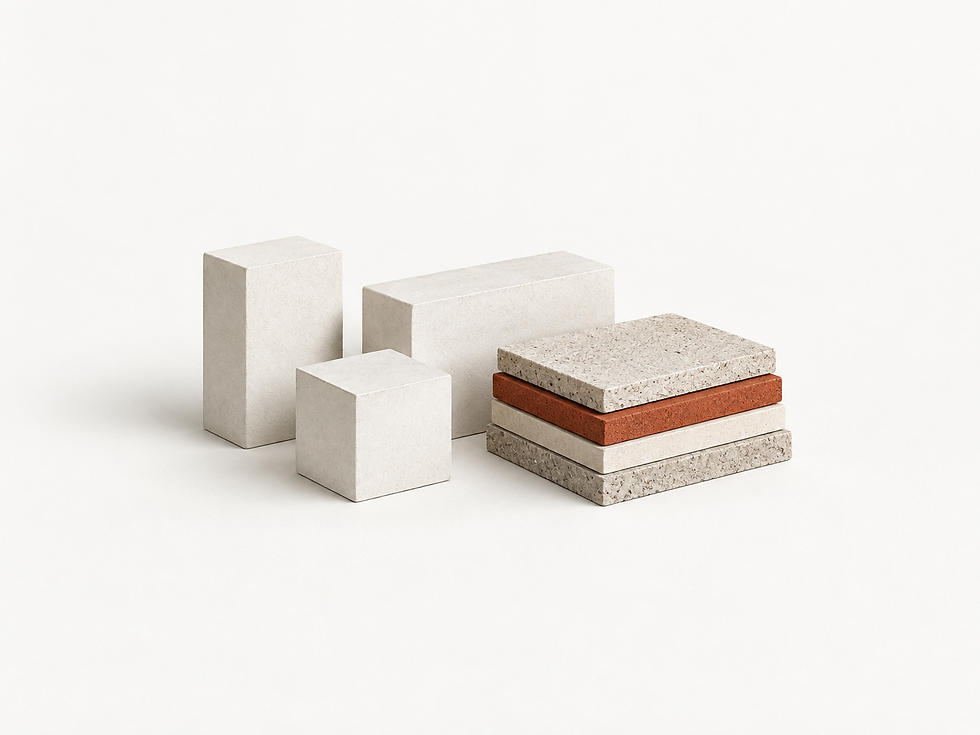
Bring the main materials together rather than approving each sample separately. Compare the floor, walls, joinery and metalwork in the light of the actual space. Look at tone, texture, reflectivity and the size of visible joints. A restrained palette can still have depth; variation in finish may be more useful than adding another colour.
A sample is a starting point. Where the finish is important, agree a larger sample or trial area and establish what natural variation is acceptable before ordering.
Compare the questions that matter
Appearance: What will change between the small sample and a full surface? How do edges and joints look?
Use and care: What cleaning, sealing or refinishing does this particular product require? Can a damaged area be repaired?
Installation: What substrate, preparation, fixings and specialist labour are needed?
Supply: Are the quantity, batch, lead time and replacement pieces available when required?
Cost: Does the quotation include delivery, waste, preparation, fitting and finishing, as well as the material itself?
Use the Renovation Cost Calculator to place selected finishes and renovation jobs within an early project budget. Refine that scope with actual product choices, preparation requirements and supplier quotations.
Treat environmental claims carefully
A natural appearance or recycled-content label does not, by itself, establish that one choice has a lower overall impact. Consider retention and reuse first, then ask for relevant product information and comparable environmental data where available. RICS whole-life carbon guidance considers impacts across the building life cycle, rather than treating a material name as a complete answer.
Resolve the junctions before ordering
Draw or sample the places where materials meet: a floor against a glazed door, a worktop against a wall, or cladding around an opening. Thicknesses and tolerances affect these details. Confirm who is responsible for coordination and avoid ordering a product solely because it looks right in an isolated image.
Make the decision easy to revisit
Keep a short selection schedule with the product reference, finish, intended location, supplier, approved sample and open questions. If a substitution is proposed, compare it against the same criteria. This gives the team a clear record of what was chosen and why.
For your first conversation with TNCO, bring photographs of the space, a few reference images and a note of what you want to retain. We can discuss how material choices fit the wider design, with the scope of support agreed for your project.
Sources and further reading
General guidance, not a project-specific assessment. Requirements and guidance can change.

Comments